Women's Meeting Minutes
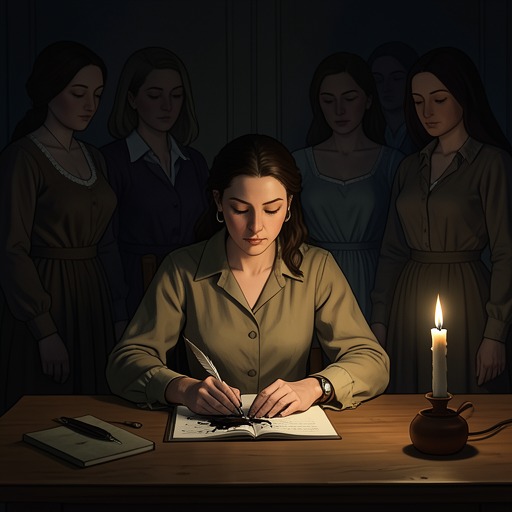
Women TalkingThe Women's Meeting Minutes are the written record of the women’s discussions about the attacks in the Molotschna Colony and their choices of how to respond. Their significance lies not only in what they preserve, but in the unequal conditions of their making: August Epp records and translates for speakers who cannot read the document themselves. The minutes therefore hold spoken deliberation in written form while also exposing who has the power to record, interpret, and inherit that deliberation.
Purpose and Conditions of the Record
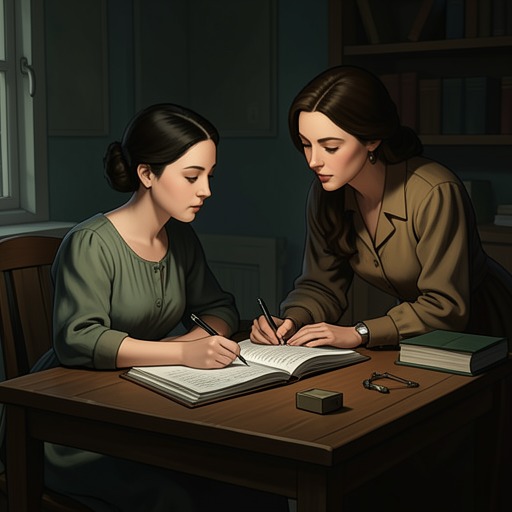
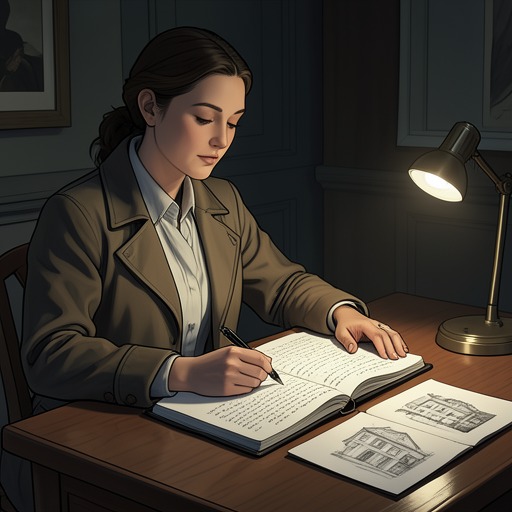
Ona Friesen asked August Epp to record the meetings and create a document about them. He explains that he has been appointed minute-taker because the women are illiterate and cannot make the record themselves. A schoolteacher accustomed to writing, he considers his name and the date appropriate at the top of the page. The task is practical, but it also gives a male intermediary responsibility for turning the women’s speech into a document.
The need for the meetings arose from years of attacks on girls and women in the colony. The assaults had been attributed by many to ghosts or Satan; the perpetrators were eventually identified as eight men from Molotschna, including close relatives of some victims. The minutes belong to the women’s response to this revelation. They preserve a collective effort to assess choices and consequences in a community where the people most affected have had little authority over the explanations imposed on them.
Translation and Mediation
The women speak Plautdietsch, the language spoken in the colony and the only language they know. August must translate their speech into English in his mind before he can write it down. His account thus describes a sequence of mediation: the women speak, August interprets, and the resulting English text stands in for discussion that its speakers cannot independently read or verify.
The record is not presented as a transparent transcript. August includes explanatory notes about language and context, as well as observations and interpretations of his own. His comments can clarify what the women’s words mean to an outside reader, but they also make his role visible within the document. The minutes preserve the women’s reasoning while bearing the marks of the recorder who selects, translates, and frames it. Their form holds a tension between testimony and mediation rather than concealing it.
The Deliberations Preserved
The discussions documented in the minutes move among religious obligation, safety, forgiveness, and the meaning of leaving. Agata Friesen argues that pacifism is central to Mennonite faith: remaining in the colony risks drawing the women into violence, whether as its targets or its participants. She presents leaving as a way to protect themselves and their children while acting consistently with peace, love, and forgiveness. In this reasoning, departure is not a rejection of faith but a means of living by it.
Ona challenges the logic of requiring forgiveness when the women were unconscious during the attacks and have been denied counseling on that ground. Her argument makes the women’s lack of knowledge part of the issue: being kept ignorant of the world, she suggests, cannot make them free. The minutes also preserve debate over who may define the available choices. Salome Friesen objects to treating one woman as the authority on what counts as a real option, even while the women agree to deliberate collectively about their response.
Other exchanges examine how authority operates through literacy and biblical interpretation. Salome points out that the women cannot read the Bible and that their supposed duty to submit to their husbands has been conveyed through their husbands’ interpretations. Ona identifies this inability to read or write as a serious disadvantage in negotiating the meaning of scripture. The written record consequently preserves more than arguments for one immediate decision: it registers the women’s scrutiny of the structures that have restricted their ability to interpret, speak, and choose.
Paper, Lists, and Future Readers
The minutes are accompanied by an effort to make the deliberation materially visible. Ona gives August a large sheet of brown packaging paper and asks him to set out lists of the pros and cons of the women’s options. The women will not be able to read what he writes, she acknowledges, but they intend to leave the sheet in the hayloft as an artifact for others to discover. The lists are therefore meant both to organize a decision in the present and to testify to future readers that the women considered their choices.
That intention matters because the women’s inability to read does not mean they have no interest in written knowledge. They commission the document and decide where a record of their reasoning should remain. Their act cannot remove the inequality between speakers and scribe, but it gives the record a purpose beyond August’s immediate account: a trace that might be encountered by people who can read what the women themselves could not.
The Handoff and the Record’s Afterlife
Near the end, August gathers his notebooks and the minutes and asks Salome to give them to Ona. Salome points out that Ona cannot read them and asks what she would do with them; the notebooks might instead be used as kindling. August asks that they be kept for Ona’s child, who will be able to read them. The exchange places the document between two possible uses: as paper for a fire in the immediate circumstances, or as a record carried forward for a future reader.
Salome takes the notebooks and descends from the loft. August watches her run toward the convoy of buggies lining up behind the schoolhouse as the women prepare to leave. The minutes do not substitute for that movement or for life beyond the document. August reflects on their limited power beside the women’s migration, freedom, and desire to protect their children, preserve their faith, and think for themselves. Yet the final handoff gives the record a concrete future: it is entrusted to Ona and, in hope, to the child who may one day read what the women could not.